Outdoor Wedding Photos: How a Photographer Shoots 6 Classic Scenes
Great outdoor couple photos come down to three decisions a photographer makes before the shutter ever clicks: the light, how the gown and palette answer the setting, and how you direct two people to relax. Get those right and the location almost shoots itself. Below — scene by scene — is how a couples photographer approaches six classic outdoor settings: the light to wait for, the dress shape and colors that read best, how to pose without it feeling posed, and the mistakes that quietly ruin a frame.
The 6 scenes, and how a photographer shoots each
1. Beach at sunset — backlit and breezy
The sea gives you the cleanest light of the day, but only at the right hour. Work the 60–90 minutes before sunset and put the sun behind the couple: backlight rims the hair and veil with a soft halo and turns the water into a sheet of highlights, where front light would only flatten faces and cause squinting.
- Light: backlight for the rim glow; slide into blue hour just after sunset for cooler, calmer tones.
- Gown & palette: a fluid silhouette earns its place — a fitted satin mermaid, or an off-shoulder A-line whose train and long veil lift in the sea breeze. Ivory reads softer than stark white against warm sand. A classic dark three-piece suit anchors the groom against the bright background.
- Direct them: a slow barefoot walk along the waterline, a veil caught by the wind, a forehead-to-forehead pause as the light drops.
- Avoid: midday overhead sun, and high tide that leaves no dry sand to work on.
2. European garden — soft side-light and lace
A manicured garden or a stone-walled estate is the most classically romantic of the outdoor scenes, and it wants gentler, more directional light than the beach.
- Light: shoot in the soft window of late afternoon with the sun about 45° to the side and front — side-light shapes faces and brings out the texture of hedges, roses, and stonework.
- Gown & palette: lace suits the formality here — an off-shoulder lace A-line with a long train, in ivory, against green hedges and pale roses. A tailored dark suit keeps the groom crisp.
- Direct them: walk a garden path, pause by a fountain or rose bed, a hand at the small of the back — relaxed but composed.
- Avoid: flat front-on light that kills the dimensionality of the foliage; busy backgrounds that compete with the couple — find a clean arch, hedge, or doorway to frame them.
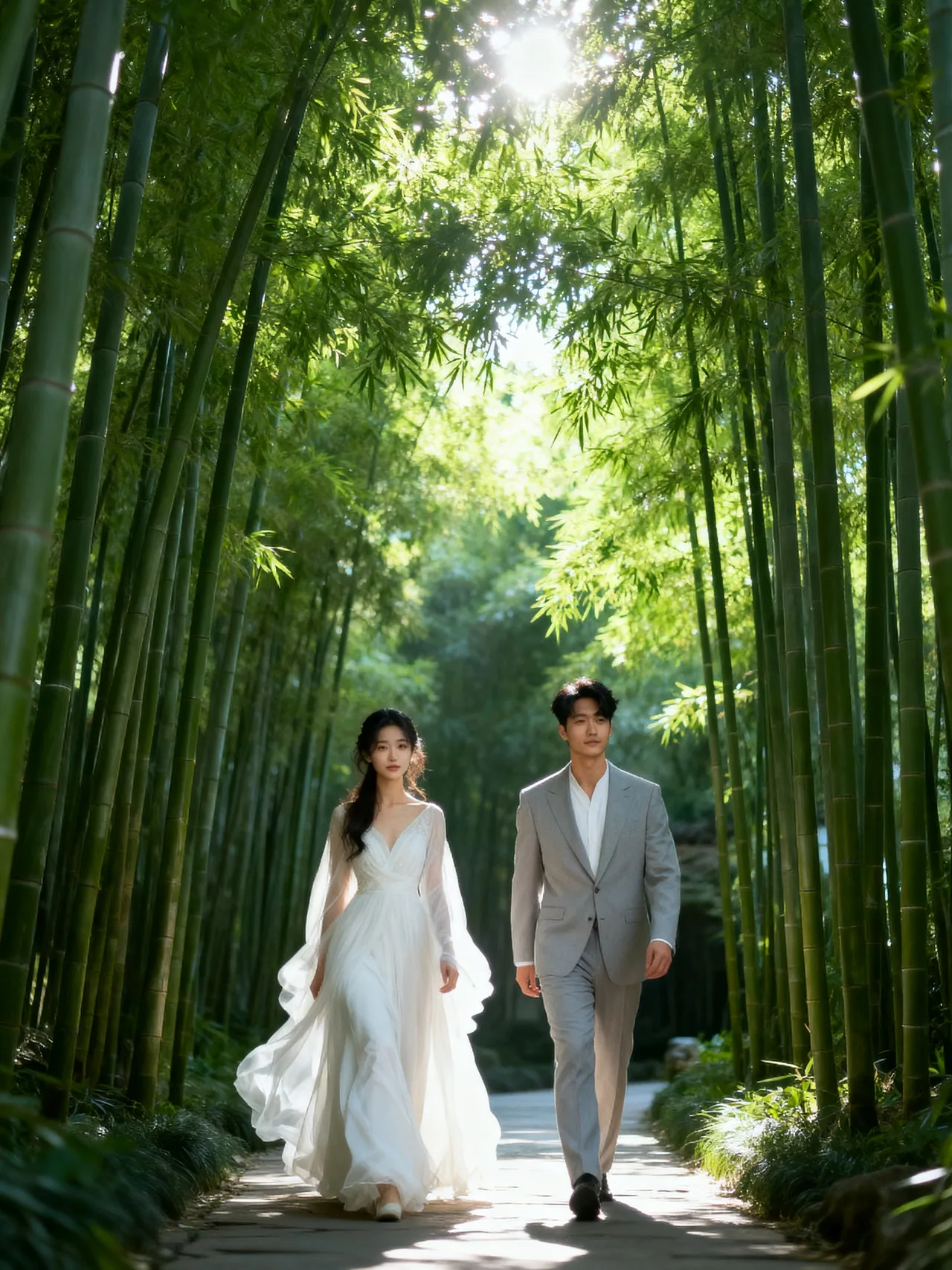
3. Forest — dappled light and a boho mood
A forest is the most intimate, sheltered scene, built on dappled light filtering through the canopy. It rewards a softer, free-spirited styling.
- Light: overcast keeps the canopy even and easy; on a sunny day, wait for shafts of light (“god rays”) through the trees, or move the couple into open shade to avoid blotchy highlights on faces.
- Gown & palette: a flowing bohemian slip in lightweight lace, loose waves, a barely-there look — paired with a relaxed linen suit or an open-collar shirt. A light morning mist adds depth.
- Direct them: a quiet walk down a mossy path away from camera, a couple half-hidden among the trunks, close and wrapped-up frames.
- Avoid: patchy hard sun (those harsh light spots on skin) — the single most common forest mistake.
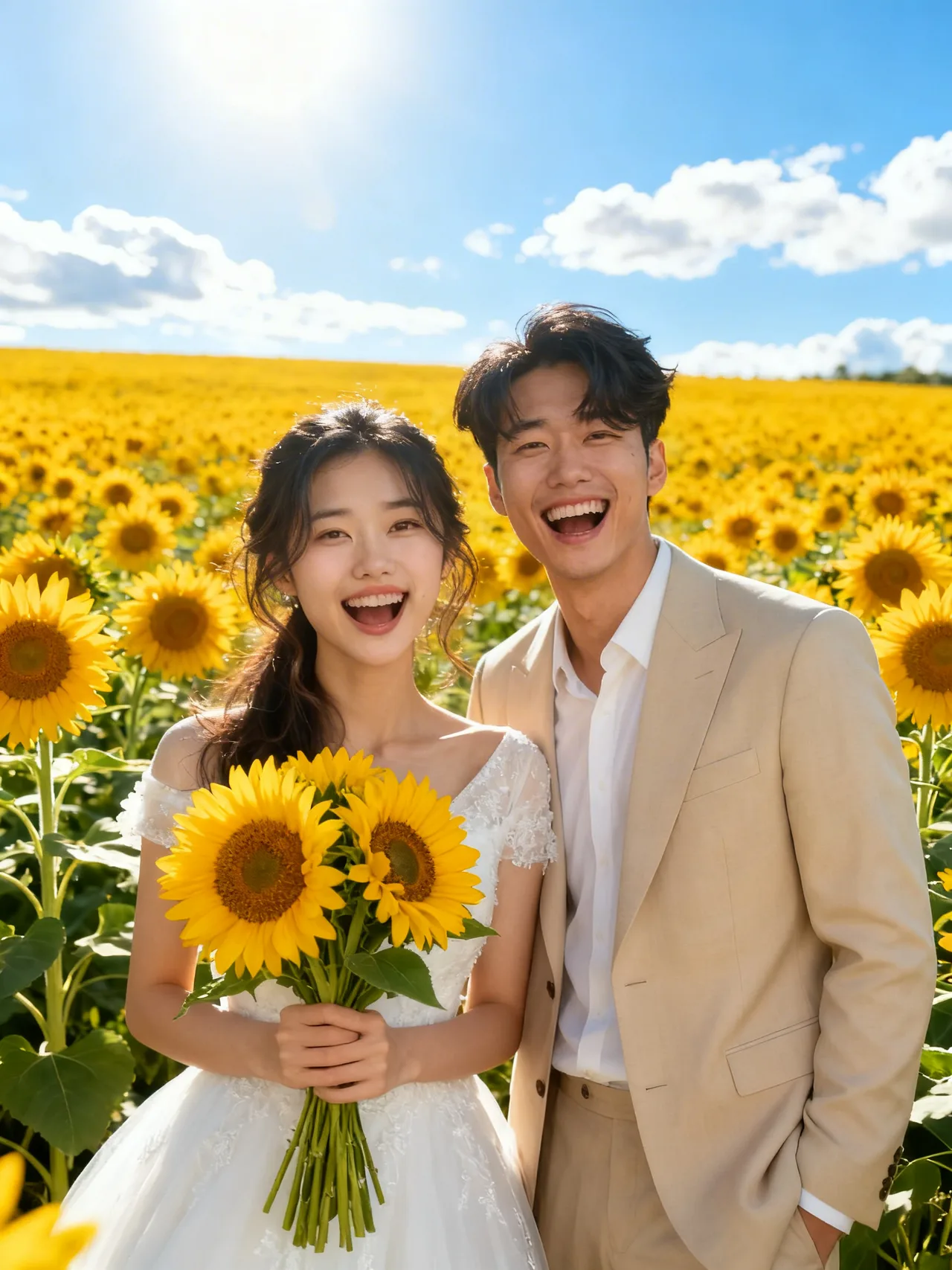
4. Meadow & sunflower field — golden backlight, free-spirited
Open fields — tall grass, wildflowers, a wall of sunflowers — are pure golden-hour territory, with the warmest, most joyful light of any outdoor scene.
- Light: backlight at sunset, with the sun low on the horizon behind the field. It rims the hair and the dress hem, and lets light glow through the petals and grass — the whole frame turns honey-gold.
- Gown & palette: lean fully into bohemian — a flowing lace slip, a wildflower or daisy crown, woven accessories; for him, a rolled-sleeve linen shirt and chinos. The relaxed styling matches the openness of the land.
- Direct them: walk through the grass, a twirl, a bouquet of field stems, a laugh — movement reads as joy here.
- Avoid: a mowed, manicured lawn (it looks flat and corporate) — you want height and texture; and midday sun that bleaches the gold right out.
5. Snow-mountain meadow — crisp side-light, alpine clarity
A green alpine meadow under snow-capped peaks is the most majestic scene, and the light is the opposite of the beach: clean, cool, and crisp.
- Light: shoot the soft morning window, when low side-light catches the green meadow and the first sun strikes gold on the peaks (“alpenglow”). The cool ambient light keeps skin fresh and clear.
- Gown & palette: a light, airy lace A-line in ivory moves well in mountain air; a pale grey or soft linen suit suits the fresh, clean palette better than heavy black.
- Direct them: use the scale — stand the couple small against the peaks, a wide frame with lots of sky and mountain, then move in for an embrace.
- Avoid: flat midday light that turns snow and sky into a grey wash; over-bright exposure that loses detail in the white peaks.
6. Starry campsite — warm light against a cool night
The hardest and most rewarding outdoor scene: a couple under the Milky Way, lit by the warm glow of a tent and string lights. It lives entirely on the contrast between warm foreground and cool night sky.
- Light: a warm light source from the side (string lights, a lantern, the tent glow) on the faces, against the deep blue-violet of the night sky. Out-of-focus string lights become soft bokeh behind them.
- Gown & palette: keep it soft and bohemian — a lace slip and a delicate veil or crown — so the figures stay light against the dark scene.
- Direct them: sit close on a blanket, share a quiet moment by the lights, look up — stillness suits the night.
- Avoid: lighting faces too cool or too hard (it kills the cozy mood); a cluttered foreground that fights the simplicity of the stars.
The three lights you’ll actually use outdoors
Almost every outdoor frame uses one of three lighting setups — learn to recognize them and you can shoot any scene:
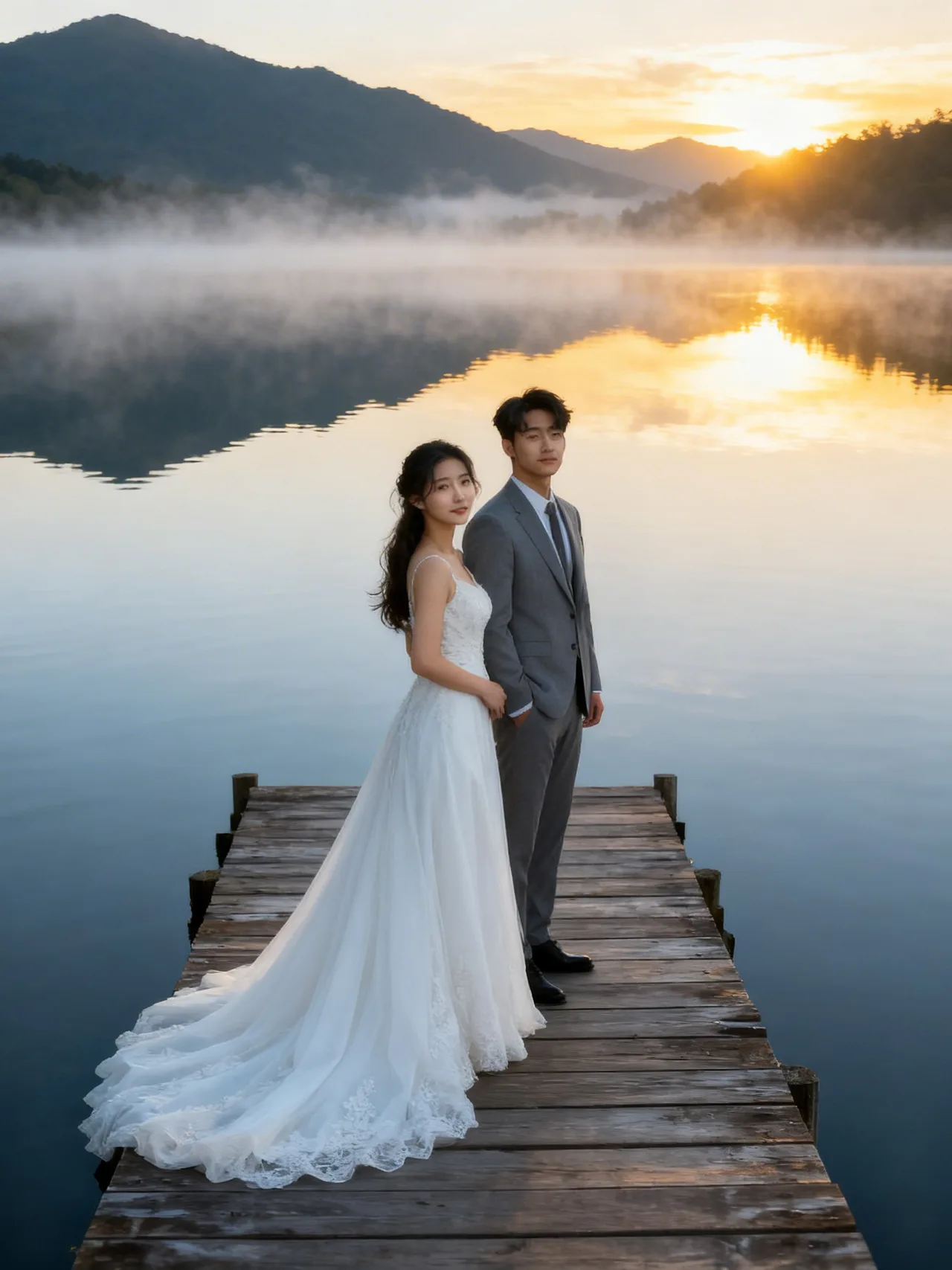
- Backlight (rim light) — sun behind the couple, low in the sky. Wraps a glowing edge around hair, veils, and dress hems, and separates the couple from the background. The signature golden-hour look (beach, meadow, sunflower field, lakeside).
- Side-light — sun ~45° to the side. Shapes faces with gentle shadow and reveals texture (foliage, stone, snow). Best for gardens and mountain scenes.
- Overcast / open shade — soft, even, forgiving light with no harsh shadows. The most beginner-friendly light, and the rescue plan when the sun is high and hard (forests, midday anywhere).
The thread through all three: soft, warm, directional light flatters skin; hard overhead sun does not. When in doubt, shoot at golden hour or find shade.
Wardrobe: let the gown answer the setting
A photographer styles the couple to the scene, not in spite of it:
- Formal scenes (garden, lakeside, snow mountain) → a fitted, structured silhouette: satin mermaid or lace off-shoulder A-line, a tailored suit.
- Free-spirited scenes (forest, meadow, sunflower field, campsite) → a flowing bohemian slip in lightweight lace or chiffon that moves with the wind, an open-collar linen shirt.
- Palette: build on an ivory or soft-white base — it photographs more refined than stark bright white — and echo the setting in the accessories: pearls and a long veil for formal, a flower crown and woven pieces for boho.
- Makeup: keep it skin-true. Natural, texture-preserving makeup looks real on camera; over-smoothed “plastic” skin is the fastest way to make a beautiful photo look fake.
Posing: give them an action, not a pose
The secret every couples photographer relies on: don’t ask people to hold still — give them something to do.
- Walk together, toward or away from camera, looking at each other rather than the lens.
- The pause: forehead to forehead, eyes closed — it works in every scene and reads as genuine intimacy.
- Use the environment: catch petals or a veil in the breeze, kick the surf, sit close under the string lights.
- Punctuate with close-ups: a hand on a cheek, a whispered laugh — these carry the emotion a wide landscape shot can miss.
How to choose your scene
- Easiest / most forgiving: beach or meadow — movement and golden light do the work.
- Most romantic & classic: European garden.
- Most intimate: forest.
- Most majestic: snow-mountain meadow.
- Most distinctive: starry campsite.
- Want a varied gallery? Pair two contrasting scenes — say a beach sunset and a forest — and change between a structured gown and a boho slip.
Recreate any of these with AI
A real outdoor shoot means travel, tight timing, and a lot of weather luck — sunflowers bloom for weeks, alpenglow lasts minutes, and a clear Milky Way is a planned trip. With WePics you skip all of it: upload two face photos, choose an outdoor scene, and the AI builds the frame around you — the right light, the matched gown, your real faces kept intact. You can try a beach sunset, a garden, a forest, a sunflower field, a snow-mountain meadow, and a starry campsite in minutes. Explore the Outdoor Wedding Photos collection for the full set of scenes, or browse all photo collections to find your style.
WePics style examples
Reference images from this collection show how the setting, wardrobe, pose, and light work together.
Frequently Asked Questions
What is the best time of day for outdoor wedding photos?
Golden hour — the 60–90 minutes after sunrise or before sunset — gives the softest, warmest light and lets you backlight the couple for a glowing rim around the hair. Overcast skies are the next best thing: the cloud acts as a giant softbox that wraps faces in even light. Avoid hard midday sun (roughly 11am–3pm), which drops shadows into the eyes and makes everyone squint.
What should the bride and groom wear for outdoor photos?
Match the silhouette to the setting. Formal scenes (a garden, a lakeside, a snow-capped backdrop) suit a fitted satin or lace gown — a mermaid or off-shoulder A-line — with a tailored suit. Natural, free-spirited scenes (forest, meadow, sunflower field, campsite) call for a flowing bohemian slip in lightweight lace or chiffon, paired with a linen shirt. Keep to an ivory or soft-white base; it reads more refined on camera than stark bright white, and pick up the setting with accessories — pearls for formal, a flower crown or woven pieces for boho.
How do we pose if we feel awkward in front of the camera?
Don't 'pose' — move. Walk hand in hand, look at each other instead of the lens, share a forehead-to-forehead pause, catch a veil or petals in the breeze. Action-based scenes like a beach walk or a stroll through tall grass produce natural, candid frames and take all the pressure off holding still.
Can we get outdoor wedding photos without traveling or hiring a photographer?
Yes. With WePics you upload two face photos, choose an outdoor scene, and the AI places you into it while keeping your real facial features — no venue, no flights, no waiting for the right weather. You can try a beach sunset, a forest, a sunflower field, and a snow-mountain backdrop in minutes and download the ones you love.